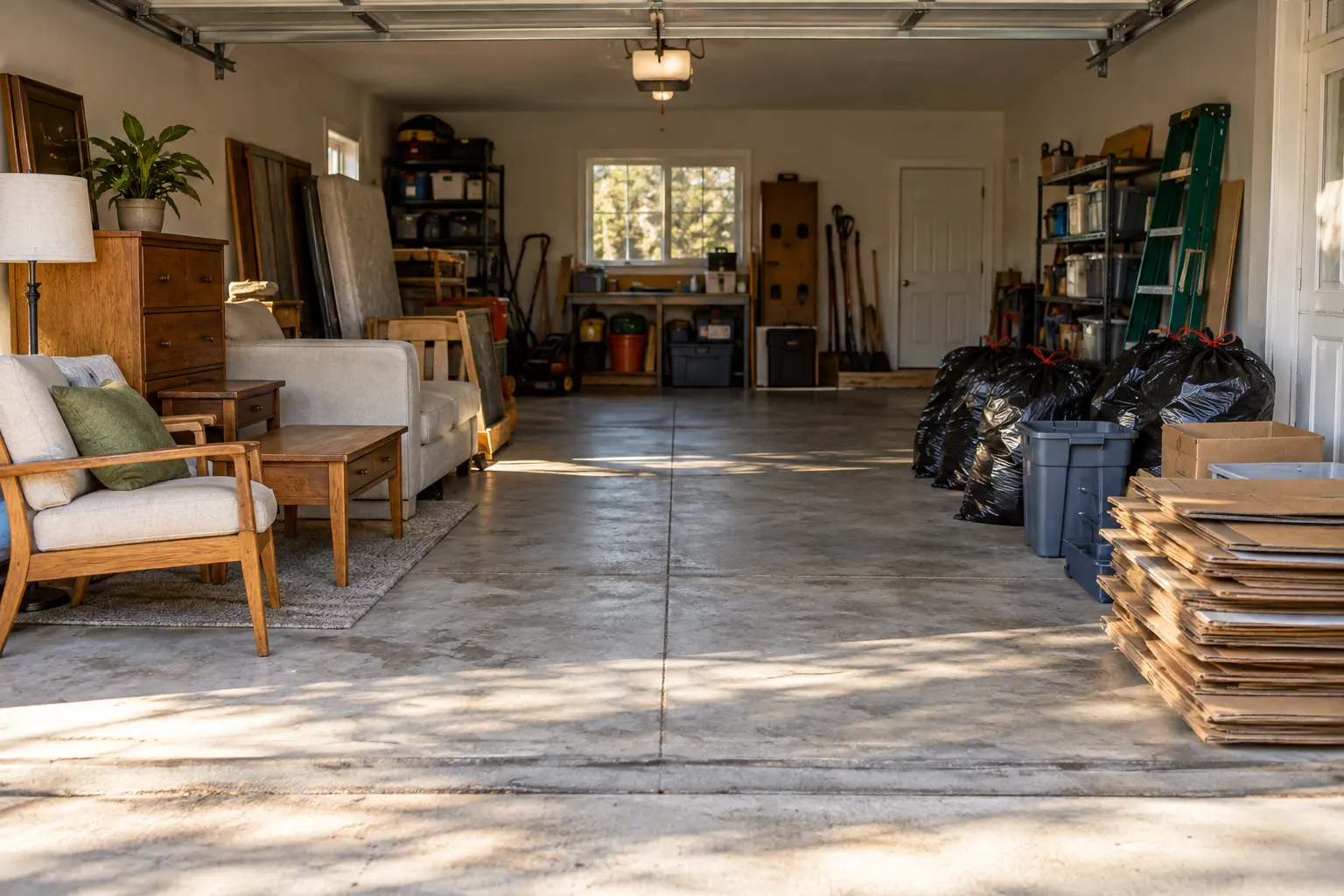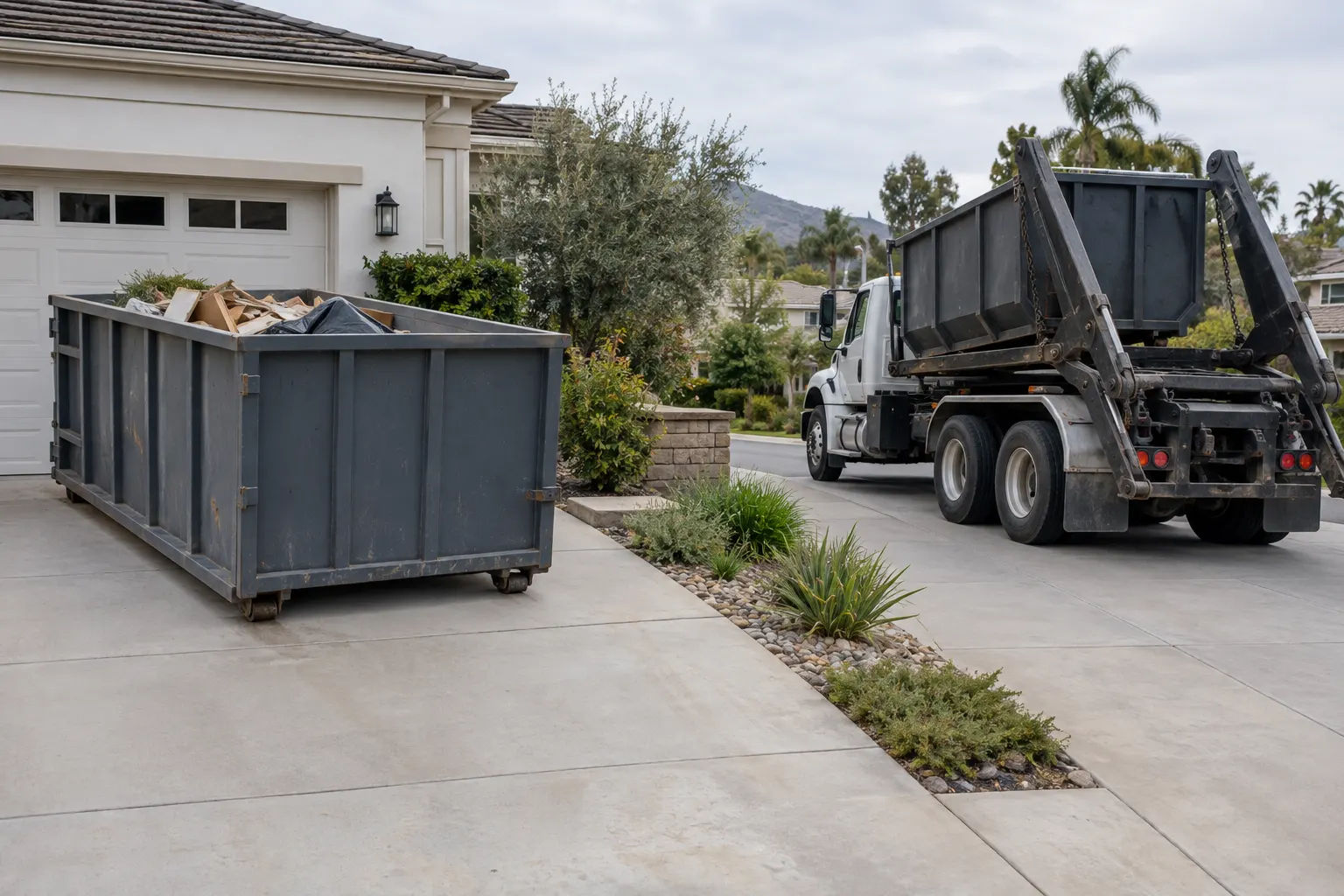
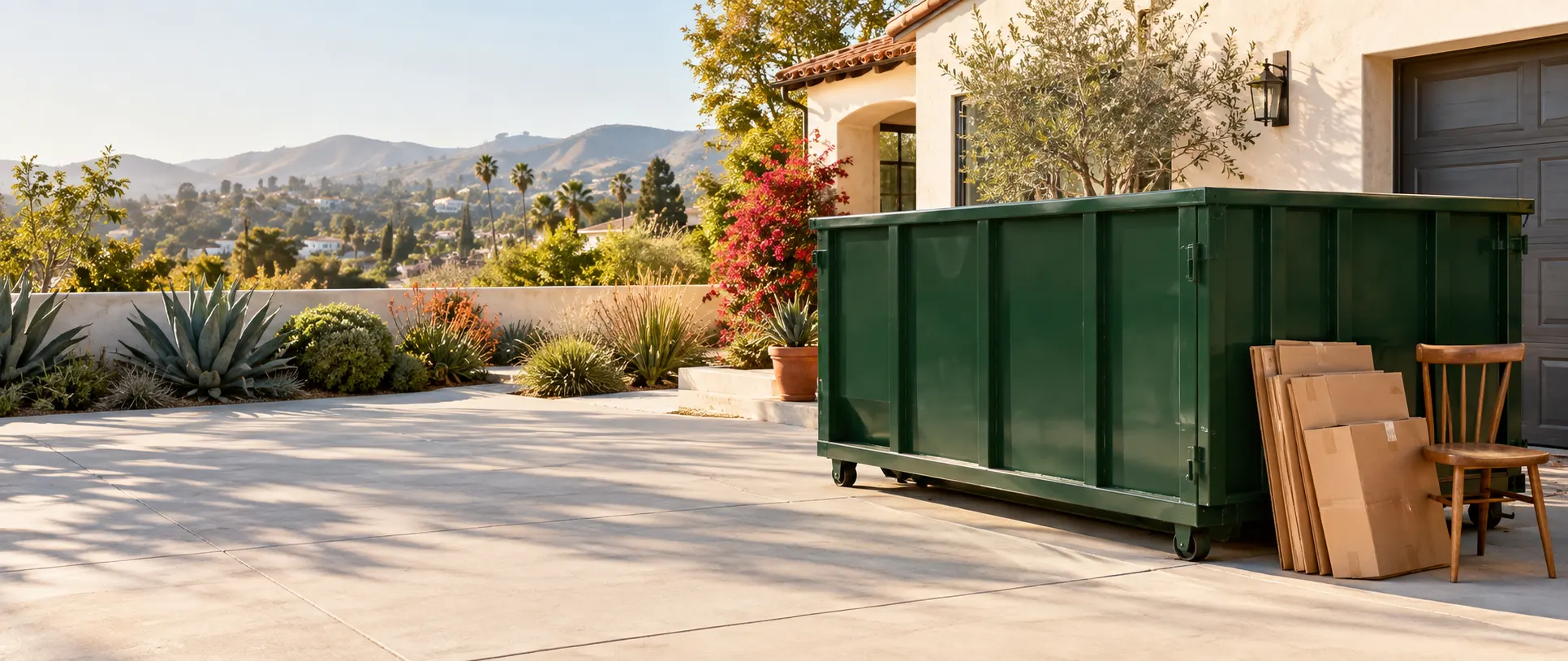

Room-by-room cleanouts
Use one central loading point while sorting a garage, spare room, storage area, or move-out pile. Keep donation items and household hazardous waste separate before anything goes into the container.
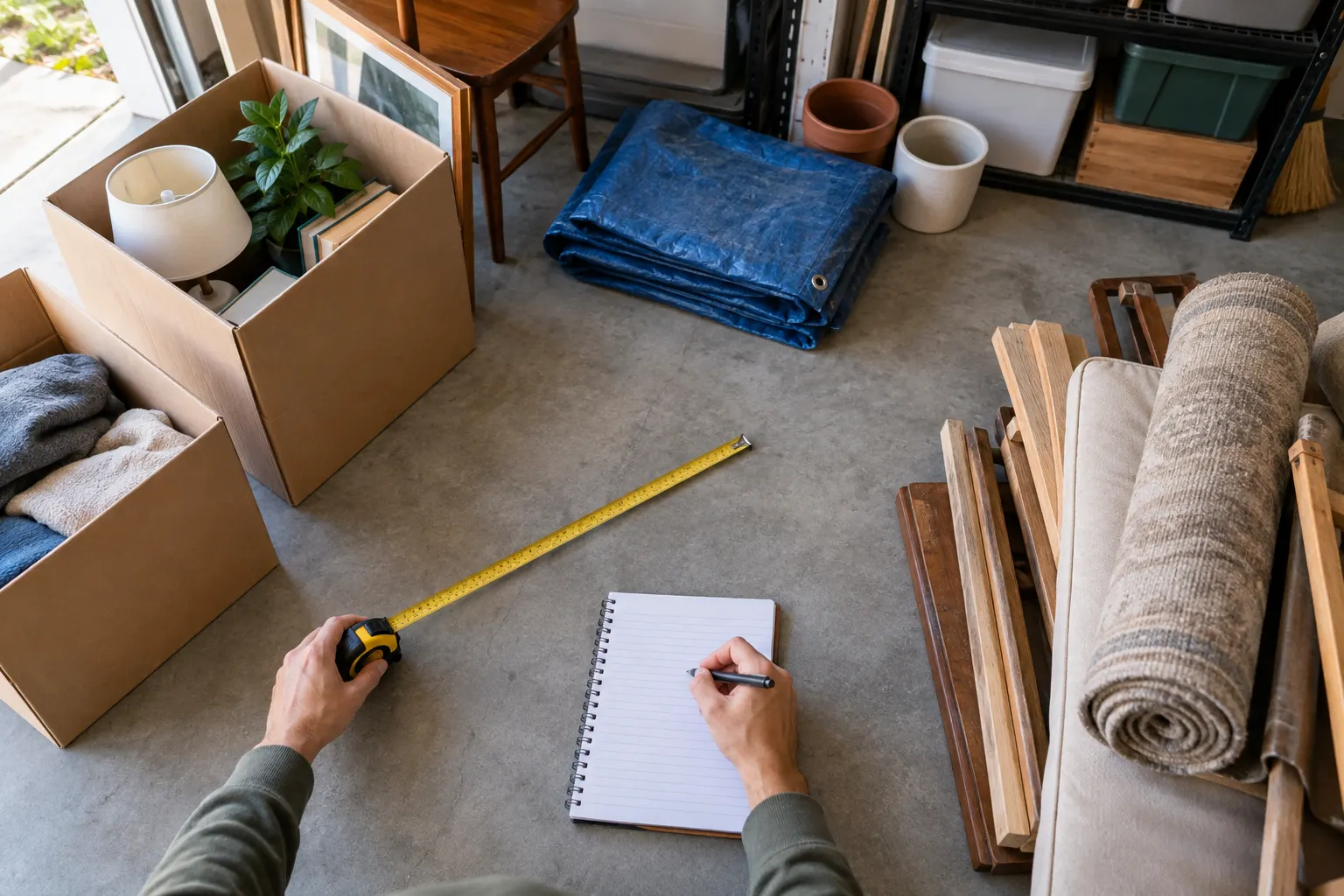
Residential dumpster rental gives you one place for approved household debris while you work at your own pace. Tell us what you are clearing, where a container could sit, and when you need it.
A residential dumpster can work well when debris will build over several hours or days. The right setup depends on the material, total volume, property access, and where the container can legally and safely sit.
Use one central loading point while sorting a garage, spare room, storage area, or move-out pile. Keep donation items and household hazardous waste separate before anything goes into the container.
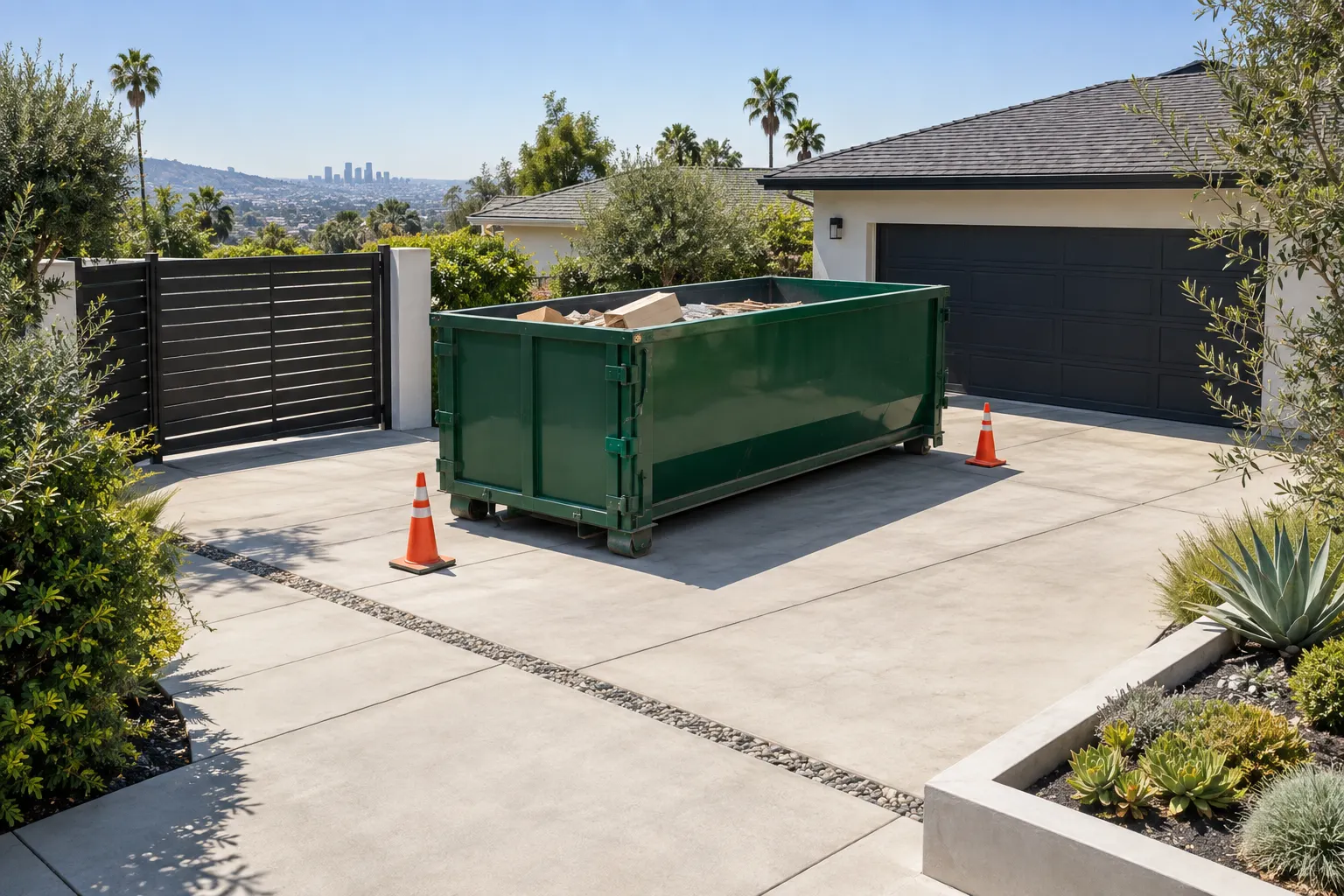
Work through bulky, broken, and non-donatable items without scheduling a pickup for every small batch.
Discuss material type before booking. Dense debris, mixed loads, appliances, and restricted items may need a different plan.
The useful conversation happens before a truck is dispatched. A good plan avoids container-size guesswork, blocked garages, rejected materials, and rushed loading.
Share the main materials, a rough pile size, any especially heavy pieces, and whether the project will create debris over time.
Measure driveway width, overhead clearance, gate openings, and the route a delivery vehicle would use. Mention slopes, soft surfaces, and street placement.
Review the rental window, delivery access, approved materials, load limits, pickup instructions, and the price before committing.
A quote should match the actual job. Have these details ready so the first conversation is useful.
Talk through your projectThe volume you need affects delivery, space, and the base rental.
Household debris, construction material, and dense loads can have different handling rules.
Your project schedule determines how long the container must remain on site.
Included weight and overage terms should be clear before loading begins.
Narrow driveways, gates, slopes, and overhead wires can change the delivery plan.
Street or public right-of-way placement may require municipal approval.
Paint, solvents, batteries, fuels, medical sharps, and other household hazardous waste need a separate disposal route. Appliances, electronics, tires, mattresses, and very heavy materials should be discussed before booking.
These guides help you choose a method, plan a placement, separate restricted items, and stage a cleanout without turning the page into a sales pitch.

Estimate volume from the actual pile, then account for bulky shapes, dense material, and placement space.
Use the sizing worksheet
Check surface, clearance, access, and public right-of-way rules before delivery.
Plan the placement
Set up sorting zones and a clear path before the container arrives.
Open the checklist
Driveways, alleys, hillside streets, overhead wires, parking limits, and municipal boundaries can all change the answer. Confirm the exact service address and proposed container location before scheduling.
The exact answer depends on the property and load, but these are the decisions worth settling early.
Start with the pile’s approximate length, width, and height, then list large hollow or awkward items. Share the material type too; weight can matter more than volume for dense debris. Our sizing guide includes a worksheet.
Public street or right-of-way placement may require City approval and special conditions. Private-property placement is usually simpler, but access and surface protection still need review. Read the Los Angeles placement guide.
Household hazardous waste such as paint, solvents, batteries, oil, and chemicals should not go into an ordinary dumpster. Electronics, appliances, tires, mattresses, and dense debris should be discussed before scheduling.
No. The supplied project details do not include an approved price sheet, and a useful quote depends on size, material, weight, rental period, location, and access. Call so the estimate can match the job.
Call with your item list, driveway details, and preferred timing. We’ll help you sort out the next step.